
Not All Light Fixtures Are Approved for Use in Ontario
Installing a new light fixture often feels like a straightforward upgrade — until questions come up about safety, inspections, or whether the fixture itself is even approved for use in Ontario.
In Ontario, all permanently installed electrical equipment must be properly certified, and lighting is no exception. This article explains what that means, where homeowners commonly get caught, and why certification matters more than many people realize.
What the Electrical Safety Authority (ESA) Requires
In Ontario, the Electrical Safety Authority (ESA) requires that electrical products connected to a building’s wiring system be approved or certified by a recognized certification body.
This applies to:
Light fixtures
Ceiling fans
Pot lights
Wall sconces
Chandeliers
Exterior lighting
If a fixture is hardwired (not simply plugged into a receptacle), it must be certified for legal installation in Ontario.
Where Homeowners Commonly Get Caught: Online Fixtures
A growing number of homeowners are purchasing lighting online — often from well-known platforms like Wayfair, Amazon, and other online marketplaces.
The issue isn’t that these companies only sell unsafe products. It’s that:
Many listings mix certified and non-certified fixtures
Product descriptions can be vague or misleading
Certification details are often buried, unclear, or missing entirely
Some fixtures are intended for markets outside North America
It’s not uncommon for a fixture to arrive looking high quality — only to have no acceptable certification mark for Ontario.
What Certification Marks Are Accepted in Ontario?
ESA recognizes several certification marks that indicate a fixture has been tested and approved for use in Ontario.
Common acceptable marks include:
CSA
cUL
cETL
ULC
Intertek (ETL)
These marks are usually found:
On the fixture itself
On the manufacturer’s label
In the installation instructions
If you don’t see a recognized mark, the fixture may not be legal to install, even if it’s sold by a major retailer.
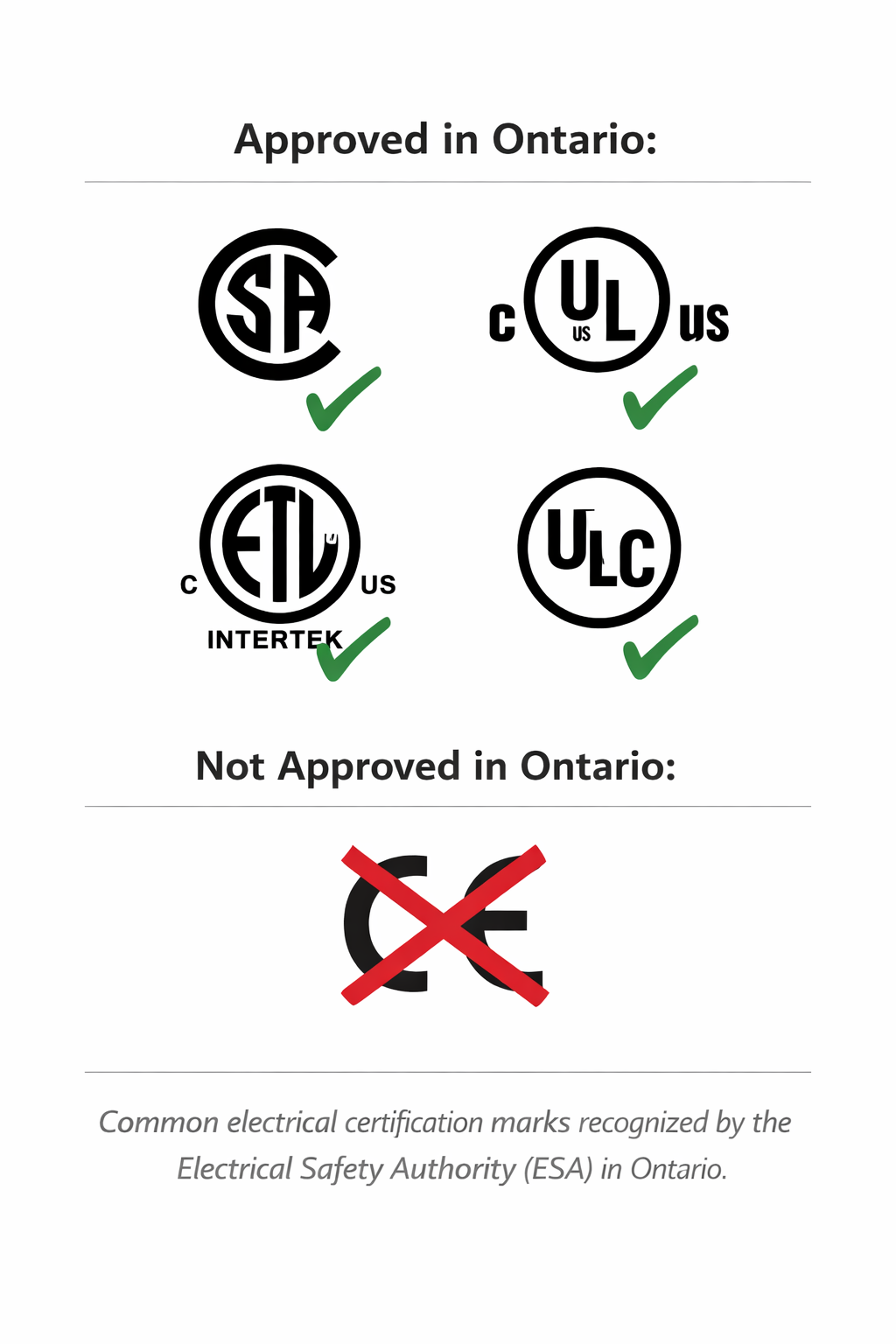
Common electrical certification marks accepted by the Electrical Safety Authority (ESA) in Ontario. Certification must appear on the fixture or manufacturer’s label — not just in online listings.
What Does Not Qualify (This Is Important)
Some markings and claims do not meet ESA requirements, including:
CE markings (European certification — not accepted in Ontario)
Labels that say “UL compliant” without actual approval
Fixtures intended for overseas markets
Products with no visible certification at all
In Ontario, CE marking alone is not sufficient for permanent electrical installation.
A Note About Electricians and Certification
This part is uncomfortable — but it matters.
Most licensed electricians take certification seriously. However, some electricians will install fixtures without checking certification markings, especially when homeowners supply the fixture themselves.
This can happen because:
The electrician assumes the retailer vetted the product
The fixture “looks safe”
The homeowner insists on installation anyway
The electrician is willing to take the risk
The reality is that the installer shares responsibility for ensuring equipment is approved. Ignoring certification doesn’t make a fixture compliant — it just shifts risk to the homeowner.
Why Certification Matters (Beyond Passing Inspection)
Certification isn’t just about rules. It’s about accountability.
Certified fixtures are tested for:
Heat management
Proper grounding
Wire insulation and spacing
Fire and shock risk
Compatibility with North American electrical systems
Installing an uncertified fixture can lead to:
Failed ESA inspections
Insurance complications
Liability issues if there’s a fire or injury
The fixture needing to be removed and replaced later
What If You’ve Already Bought a Fixture?
This is very common — especially with online purchases.
If a fixture isn’t certified:
It may be eligible for a field evaluation (approval after inspection)
Or it may need to be replaced with an approved fixture
An electrician can help determine the best option before installation, which is usually far less expensive than dealing with it after the fact.
Final Thoughts
Choosing a light fixture isn’t just about style or price — it’s about safety, compliance, and long-term peace of mind.
Before installing any hardwired lighting in Ontario, take a moment to confirm proper certification. It can save time, money, and frustration — and ensure your home remains safe, compliant, and insurable.
